A norway northern lights tour helps visitors see the aurora with guidance and local knowledge. The tour gives timing, location, and safety advice. Travelers choose a tour to increase their chances of seeing strong displays and to learn basic photography. This article shows where to go, what to expect, how to pick a tour for English speakers, and practical booking tips for 2026.
Key Takeaways
- A Norway northern lights tour maximizes your chances of witnessing strong aurora displays through expert local guidance and flexible scheduling.
- Best viewing spots are in Northern Norway towns like Tromsø and Alta, especially from late September to early April, with peak months being October, February, and March.
- Tours range from short day trips to multi-day chases and private experiences, allowing you to choose based on your time, budget, and preferences.
- Guides provide essential safety advice, aurora science, and photography tips, helping you capture the Northern Lights effectively while staying warm and safe.
- English-speaking visitors should select tours that offer clear communication, good reviews, and flexible policies to handle weather unpredictability and rebooking.
- Booking early for 2026 is crucial to secure spots and better prices, while planning extra nights increases your likelihood of seeing the aurora.
Where And When To See The Northern Lights In Norway
Norway gives reliable aurora viewing from late September to early April. The best months are October, February, and March when nights are long and skies are often clear. Northern Norway towns such as Tromsø, Alta, and the Lofoten Islands lie inside the auroral oval. Visitors choose sites north of the Arctic Circle for higher chances. They check local weather forecasts and cloud cover maps before heading out. Locals track solar activity and advise on short-term visibility. Travelers plan flexible nights to allow several attempts during a single trip.
Types Of Northern Lights Tours (Day Trips, Multi‑Day, Cruise, Private)
Day trips run from towns like Tromsø and last 4–7 hours. They suit visitors with limited time. Multi-day tours combine daytime activities and several evening chases to raise success rates. Cruises offer moving vantage points and clear horizons along fjords. Private tours give one-on-one guides, flexible timing, and tailored stops for photos. Small-group tours reduce noise and allow richer commentary. Travelers compare group size, included transport, hotel pickup, and cancellation terms. They pick a tour type that fits the itinerary, budget, and tolerance for cold nights outdoors.
What To Expect On A Northern Lights Tour
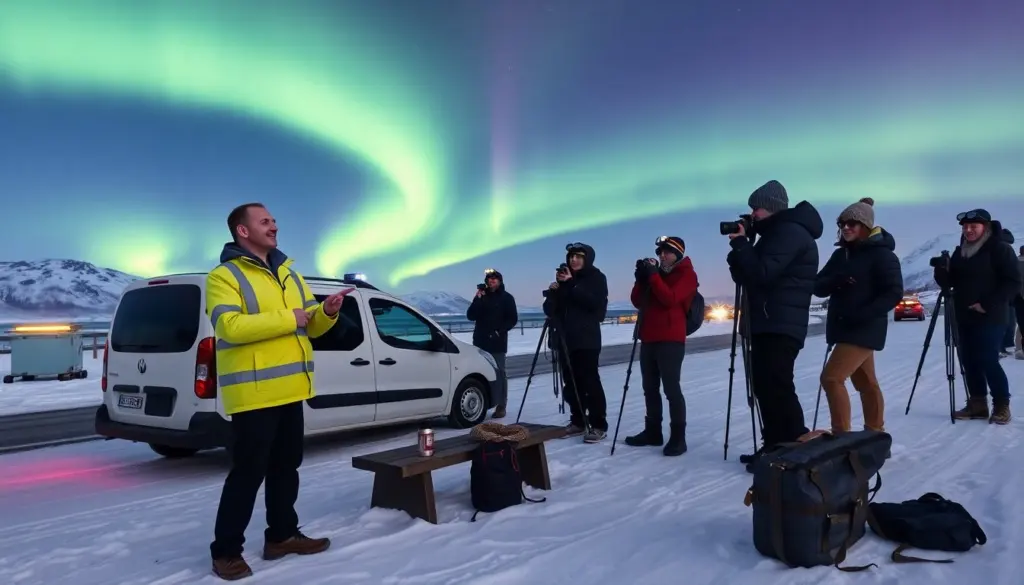
A guide briefs the group on aurora science, safety, and basic camera settings. Tours drive to darker areas away from town lights. Guides monitor forecasts and adjust plans to chase clear skies. Tours may include short hikes, stops for warm drinks, and time for tripod setup. Waiting time varies: some nights yield minutes of display, and others yield long shows. Guides notify when activity rises and coach on framing and exposure. Tours emphasize personal safety, especially on icy roads and in freezing temperatures. People should expect flexible schedules and patient watching.
Photography Tips For Capturing The Aurora
Use a tripod to keep the camera steady. Set the camera to manual mode. Choose a wide-angle lens and open the aperture to f/2.8–f/4 if possible. Start with ISO 800–3200 depending on the lens and camera. Use a shutter speed between 2 and 15 seconds: increase speed for strong, fast auroras. Focus to infinity manually or use live view on a bright star. Shoot in RAW for better post-processing. Bring extra batteries because cold drains power. Practice basic settings before the tour to avoid lost shots.
Essential Clothing And Gear To Bring
Pack layered clothing with a base layer, insulating mid-layer, and windproof outer shell. Wear insulated boots, thermal socks, a warm hat, and waterproof gloves. Use hand warmers and a neck gaiter for added comfort. Bring a compact tripod and a remote shutter or intervalometer. Carry spare batteries and memory cards in an inner pocket to keep them warm. Bring a headlamp with a red light option to preserve night vision. A small thermos with a hot drink helps morale during long waits. People should check local rental options for camera gear if needed.
How To Choose The Right Tour For English‑Speaking Visitors
Look for tours that list English as the guide language. Read recent reviews to confirm guide clarity and helpfulness. Choose companies that provide clear pickup instructions and contact numbers in English. Ask about group size and how the guide communicates during chases. Confirm what gear, clothing, or transport the company supplies. Prefer operators with updated safety protocols and flexible rebooking in case of poor weather. Contact the operator with specific questions about photography help, language support, and expected return times. English speakers should book tours that explicitly support non‑Norwegian guests.
Costs, Booking Tips, And Practical Considerations
Tour prices vary by type: day trips cost less, multi-day tours cost more, and private tours cost the most. Expect mid-range group tours to cost between €100 and €200 per person in 2026. Book early for peak months to secure spots and better rates. Check cancellation policies and bad-weather guarantees. Factor in transport to departure towns, warm clothing, and camera rentals. Purchase travel insurance that covers weather-related changes. Confirm local pickup points and departure times. Finally, allow extra nights in the destination to improve the odds of seeing the aurora.