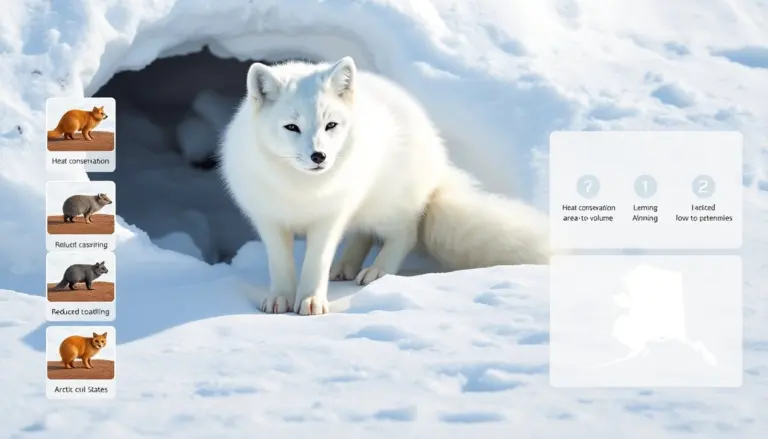
The arctic fox diet drives its survival in cold places. The article explains what the fox eats, how the diet changes with seasons and places, and why the diet matters for ecosystems. It gives clear facts, simple examples, and practical details. Readers will get a reliable picture of the arctic fox diet and its role in food webs and conservation.
Key Takeaways
- The arctic fox diet primarily consists of meat and fat, with lemmings as a crucial food source where available, supporting their survival in harsh cold environments.
- Seasonal and geographic variations greatly influence the arctic fox diet, shifting from lemmings and birds in summer to marine carrion and scavenged food in winter, adapting to prey availability.
- The arctic fox employs specialized hunting and scavenging behaviors, including precise snow pouncing and food caching, to efficiently find and store food for lean periods.
- Human presence alters the arctic fox diet by providing food waste, which can reduce natural hunting but raise disease risks and affect fox behavior.
- Tracking diet through scat analysis and observation helps researchers understand fox resilience to environmental changes and supports effective conservation planning.
What Arctic Foxes Eat: Core Foods And Nutritional Needs
The arctic fox diet centers on meat and fat. It eats small mammals, birds, eggs, insects, and carrion. Lemmings form the base of the diet where lemmings occur. The fox hunts lemmings by listening, pouncing, and digging. When lemmings are abundant, the fox stores excess meat and fat for leaner times.
The fox also eats waterfowl and their eggs during nesting season. It takes ptarmigan, sandpipers, and other shorebirds when available. The fox eats eggs whole or breaks them and eats the yolk and white. Eggs provide protein and fat that the fox needs for breeding and cub growth.
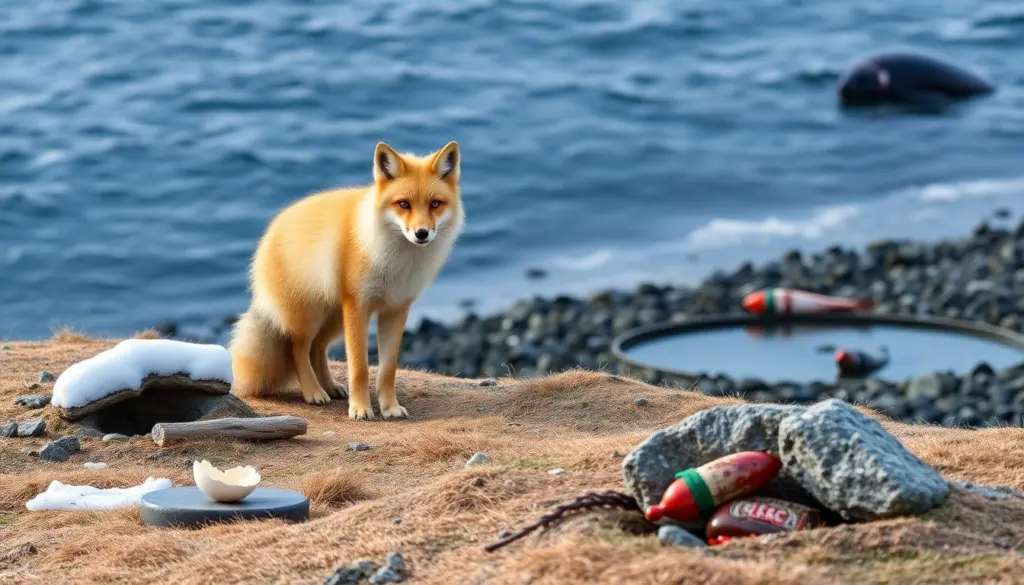
The fox consumes marine foods near coastal areas. It scavenges whale and seal carcasses. It takes fish and crustaceans from tide pools. These items supply high-fat calories in late winter and spring when terrestrial prey is scarce.
In summer, the fox adds insects and berries to its diet. It eats beetles, flies, and moth larvae. It eats crowberries and blueberries. These foods supply vitamins and help the fox meet daily energy needs when meat is harder to catch.
Nutritional needs vary by season and life stage. Adults need calories for body maintenance and fur growth. Breeding females need extra protein and fat to support pregnancy and nursing. Cubs need frequent high-calorie meals to grow quickly before winter. The arctic fox diet shifts to meet these needs naturally.
Humans influence diet through waste and food subsidies. In some towns and research stations, foxes take food from garbage and caches. This change can reduce hunting effort but can also raise disease risk and alter fox behavior.
How Seasonal And Geographic Variation Shapes Their Diet
The arctic fox diet changes with season and location. In tundra zones with high lemming cycles, the fox relies on lemmings in summer and winter. In coastal areas, the fox relies more on marine carrion and seabird colonies. On islands, the fox may specialize on seabirds and eggs.
Season sets prey availability. Spring brings bird colonies and eggs. The fox shifts to eggs and nestlings in spring. Summer brings insects, berries, and young mammals. The fox broadens its diet to include these items. Autumn brings fat-rich marine carrion and migrating birds. The fox increases fat intake to prepare for winter.
Winter can be leaner inland. When snow covers tundra, small mammal access drops. The fox then scavenges carcasses or follows predators like polar bears to take leftovers. In coastal ice-free zones, winter may still offer marine food. Geographic factors determine whether winter is a food gap or a time of steady supply.
Prey cycles also shape population and diet. Lemming population swings occur roughly every three to five years in many regions. The fox population and breeding success rise in high-lemming years. The fox diet becomes lemming-heavy in those years. In low-lemming years, foxes eat more birds, eggs, and carrion, and breeding declines.
Climate change shifts these patterns. Warmer winters reduce sea ice and change bird distributions. Some coastal sites see more marine carrion as whale and seal mortality patterns shift. Other tundra sites see altered lemming cycles. These changes force the fox to adapt diet and range. Researchers track diet shifts to assess fox resilience and ecosystem change.
Feeding Behavior, Hunting Strategies, And Scavenging Roles In The Ecosystem
The arctic fox diet links to clear feeding behaviors. The fox hunts by listening, stalking, and leaping onto prey under snow. It uses a high, precise pounce to break through snow to reach rodents. It also digs shallow or deep holes to reach burrows.
The fox varies hunting by prey type. It hunts small mammals with quiet stalking and sudden leaps. It catches birds by stalking near nests and running short bursts. It takes eggs by raiding nests at night or day depending on disturbance. It scavenges larger carcasses by feeding slowly and guarding the resource.
The fox caches food in shallow pits or under rocks. It buries meat and fat for later use. Caching ensures food during lean times and for feeding cubs. The fox returns to caches and reclaims stored items. Food storage helps populations survive low-prey years.
The fox acts as both predator and scavenger in food webs. It controls rodent numbers and reduces nest success for some birds. It also cleans up carcasses and redistributes nutrients across the landscape. Scavenging links terrestrial and marine systems when the fox moves marine carrion inland.
Human activity affects feeding behavior. Waste sites attract foxes and change their hunting patterns. Feeding on human food can increase boldness near settlements and raise disease risk. Conservation plans often recommend secure waste management to reduce these effects.
Researchers study diet using scat analysis, stable isotopes, and direct observation. Scat analysis reveals diet composition by frequency. Stable isotopes show marine versus terrestrial food reliance. Direct observation records hunting technique and caching. These methods help managers set conservation strategies based on diet data.