This article lists clear facts about arctic fox for readers who want reliable, direct information. It states key traits, habits, and risks for the species. It uses current data and concise descriptions. It avoids jargon and gives actionable points for people who care about wildlife. The article keeps focus on the arctic fox and its needs.
Key Takeaways
- The arctic fox’s compact body, seasonal fur color changes, and insulating behaviors help it survive extreme cold below -50°C.
- Its diet is highly adaptable, relying on small mammals like lemmings, birds, eggs, and scavenged seal meat, shifting seasonally to available food sources.
- Arctic foxes breed once yearly with denning strategies and parental care closely tied to prey availability and seasonal conditions.
- They exhibit flexible social behavior, defending territory during stable food periods and roaming widely when resources are scarce.
- Threats include climate change, habitat loss, and competition from red foxes, with conservation efforts focused on protecting habitats and minimizing human disturbance.
Physical Appearance And Extreme Cold Adaptations
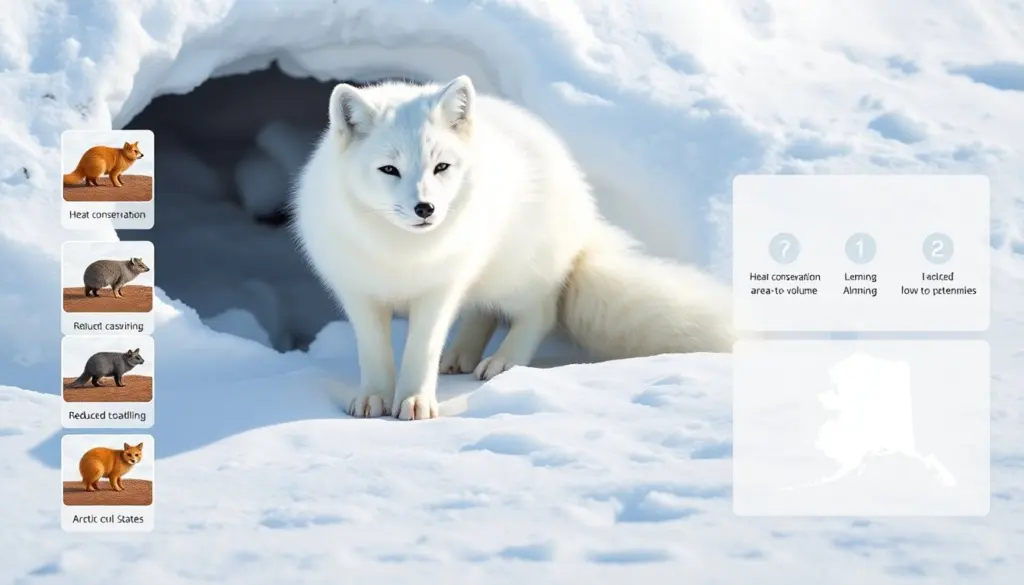
The arctic fox has a compact body that conserves heat. It shows short legs, short muzzle, and rounded ears. It grows a thick winter coat that covers paws and fur that changes color by season. The winter coat looks white and blends with snow. The summer coat looks brown or gray and blends with tundra. The fox stores fat in autumn to fuel winter activity. It lowers blood flow to extremities to avoid heat loss. It uses fur on the footpads to walk on ice and deep snow. It survives in temperatures below -50°C by keeping a low surface-area-to-volume ratio and by using insulated dens. These facts about arctic fox show clear physical and physiological steps the species uses to live in the cold.
Diet, Hunting Techniques, And Seasonal Feeding Strategies
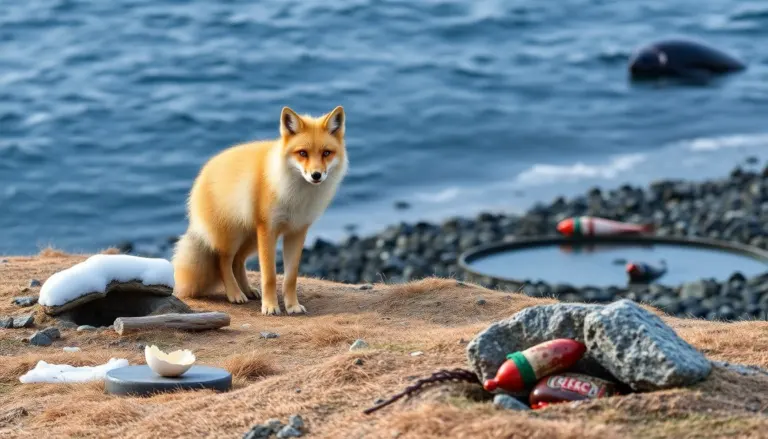
The arctic fox eats small mammals, birds, eggs, carrion, and berries. It prefers lemmings when lemmings occur in large numbers. It hunts by listening and pouncing on prey under snow. It caches excess food in shallow holes or under rocks. It shifts diet in summer to include more birds and eggs. It scavenges leftover seal meat near polar bear kills along the coast. It follows seabird colonies during breeding season to take eggs and chicks. It may also eat insects and seaweed when other food runs low. These facts about arctic fox show a flexible diet and clear feeding tricks that match seasonal food cycles.
Reproduction, Lifecycle, And Cub Development
The arctic fox breeds once per year. The pair forms in spring and the female gives birth in late spring. The female digs or reuses a den that provides shelter and stable temperature for pups. The litter size varies with food and can range from two to over a dozen pups. Parents feed pups until pups can hunt at about three months. Pups open eyes and start to explore at two to three weeks. The family may use nearby perches and scent marks to teach hunting. Juveniles disperse in late summer or autumn to find vacant territory. These facts about arctic fox show a life cycle tied closely to prey cycles and to seasonal weather.
Behavior, Territory, And Social Structure
The arctic fox holds territory around dens and food caches. It marks territory with urine and scat. It shows monogamous tendencies when food is stable and the pair defends a den together. It can act solitary when food is scarce and may roam long distances. It uses vocal calls for contact and alarms. It shows curiosity and problem solving in urban and coastal areas where human food is present. It adapts movement to follow prey cycles and to exploit seasonal resources. It sometimes forms loose groups at rich food sites such as carcasses and seabird colonies. These facts about arctic fox describe clear social patterns and flexible space use.
Threats, Conservation Status, And How To Help
The arctic fox faces habitat change, reduced prey, and disease pressure. Climate shift reduces snow cover and increases red fox range. Red foxes compete and can kill arctic foxes. Disease risk increases with new pathogens and with exposure to domestic animals. Some arctic fox populations remain stable: others show decline. Conservation groups monitor populations and protect key denning areas. People can help by supporting habitat protection and by keeping pets vaccinated to limit disease spread. Researchers recommend limiting industrial disturbance near dens and protecting coastal carcass sites from heavy human use. These facts about arctic fox show clear threats and simple actions people can take to help the species in the coming years.