Readers ask where to see moose in Maine to plan reliable wildlife trips. This guide lists proven regions, exact viewing spots, ideal seasons, and safe practices. It uses clear directions and practical tips. It helps visitors choose routes, tours, and gear. It keeps safety and respect for wildlife central.
Key Takeaways
- Maine’s best moose viewing regions include Baxter State Park, Moosehead Lake, Rangeley, Downeast, and Aroostook County, with specific spots offering quiet and accessible wildlife encounters.
- The ideal seasons to see moose in Maine are autumn and spring, especially at dawn and dusk when moose are most active near water edges and feeding areas.
- Safety and respect are crucial: maintain at least 50 yards distance, avoid disturbing moose, and consider guided tours for better viewing and local expertise.
- Use binoculars, spotting scopes, and long-lens cameras to enhance moose sightings without causing disturbance, and plan early morning trips with layered gear and maps.
- Access recent moose sighting reports from state wildlife departments, local guides, and online resources to improve chances of seeing moose in Maine.
- Respect private property by seeking permission and following posted signs, and report injured or calm moose to Maine’s wildlife authorities for safe handling.
Best Regions To Spot Moose In Maine
Maine contains several regions with consistent moose presence. Where to see moose in Maine often depends on habitat, road access, and season. Northern Maine hosts high moose density. Central Maine supports many moose near wetlands and lakes. Downeast Maine holds moose in coastal wetlands and mixed forests. Western mountain valleys host moose in river corridors.
Top Specific Viewing Spots (Baxter, Moosehead, Rangeley, Downeast, Aroostook)
Baxter State Park offers open bogs and riparian edges where moose feed. Visitors ask where to see moose in Maine and often point to the park’s north access roads and lakeshores at dawn and dusk. Moosehead Lake region provides long shores and quiet logging roads. Travelers find moose along Route 11 and near the Kennebec River tributaries. Rangeley includes wet meadows and small ponds. State roads and scenic byways in Rangeley provide roadside viewing chances.
Downeast Maine features tidal marshes and alder swamps where moose appear at low tide edges. Locals often report moose near coastal rivers and in early morning. Aroostook County supports large moose numbers in agricultural-forest edge habitat. Where to see moose in Maine here includes country roads, snowmobile trails in winter, and river floodplains in summer. Each spot requires quiet driving, early starts, and respect for private land signs.
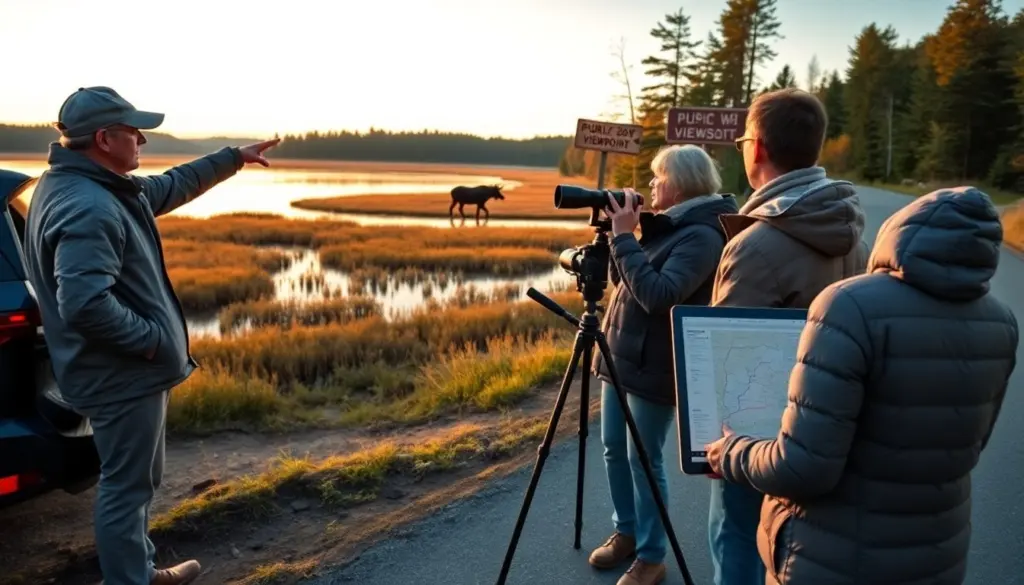
Visitors who search where to see moose in Maine should favor low-traffic roads and public viewpoints. State wildlife departments publish recent sighting reports that help narrow routes. Local guides and lodges provide short-term sightings updates and safe viewing advice.
Best Times, Seasons, And Conditions To See Moose
Autumn and spring provide the highest moose activity for most areas. Where to see moose in Maine increases in late September and October because bulls move and cows display. Dawn and dusk deliver the most consistent viewing windows. Moose feed at water edges and on woody browse during low light.
Winter delivers good views along cleared roads and frozen lakes. Where to see moose in Maine in winter often occurs along snowmobile corridors and open riverbanks. Snow makes moose movement visible against the landscape. Summer presents hidden moose in deep forest, but wetlands and dawn edges still yield sightings. Early summer contains calves near females, so observers must keep distance.
Weather affects visibility and moose movement. Warm days push moose into shaded wetlands. Cold snaps concentrate moose near unfrozen water. Rain can reduce roadside sightings but increase feeding along sheltered edges. Photographers who ask where to see moose in Maine should plan for low light, bring long lenses, and set quiet vantage points. Using binoculars and spotting scopes raises success without disturbing animals.
Safety, Ethics, And Practical Planning For Moose Viewing (Tours, Gear, Maps)
Observers must keep distance and avoid disturbing moose. People ask where to see moose in Maine and then approach too closely. Maintain at least 50 yards from adults and more from cows with calves. If a moose charges, a person should retreat to a vehicle or seek cover behind a large tree. Do not run across open ground.
Guided tours provide safe viewing and local knowledge. Guides know prime times and legal access points. Where to see moose in Maine with a guide increases safety and sighting odds. Tour operators supply binoculars, spotting scopes, and quiet transport. Many guides operate near Baxter, Moosehead, and Aroostook.
Pack simple gear for moose viewing. Bring binoculars, a camera with a long lens, layered clothing, and waterproof boots. Carry a printed or offline map and a charged phone. Check state wildlife reports and local ranger stations for recent moose sightings. Where to see moose in Maine often requires early morning departures, so plan lodging near target regions.
Respect private land and posted signs. Ask permission before entering private drives. Leave no trace and avoid feeding wildlife. Use vehicles as blinds when safe: turn off engines to reduce noise. If a person sees an injured or unusually calm moose, report it to Maine Department of Inland Fisheries and Wildlife. The department can advise on safe reporting steps.
Maps and apps help find recent sightings. State wildlife pages, local Facebook groups, and regional lodging hosts post updates. Where to see moose in Maine becomes easier with current reports and local tips. Combine reports with early starts, patient observation, and safety practices to increase viewing chances.