Musk ox size depends on sex and age: the Alaska Department of Fish and Game puts mature bulls at about 5 feet at the shoulder and 600-800 pounds, and cows at about 4 feet and 400-500 pounds.
From a distance, a herd on open ground reads as one dark mass, and it is easy to misjudge both how large each animal is and how close is too close. This guide separates the measured figures from common assumptions and ties them to viewing distance in Dovrefjell. It sits within our coverage of wildlife in norway.
Muskox size at a glance
The table groups the measured figures by sex and age, so you can match what you see in the field to a realistic body size. The height column gives shoulder height for bulls and the stated height for cows. The figures describe Greenland-race muskox in Alaska, and they work as a benchmark for the species.
| Group | Height | Weight | Planning use |
|---|---|---|---|
| Mature bull | About 5 feet at the shoulder | 600-800 pounds | Treat any large, dark-horned animal as the heaviest member of the herd. |
| Adult cow | About 4 feet | 400-500 pounds | Cows are smaller but still very heavy; do not read “smaller” as “safe to approach”. |
| Yearling | – | 150-235 pounds | A young animal can already be heavy, so keep your distance from the whole group. |
| Newborn calf | – | 22-31 pounds | Calves are born April to June; expect protective adults nearby in spring and early summer. |
| All adults combined | About 4.6 feet at the shoulder; about 8.2 feet long | 440-880 pounds | Use this wider range when you cannot tell bull from cow. |
Figures for bulls, cows, yearlings and calves come from the Alaska Department of Fish and Game, and the combined adult range comes from the National Park Service.
Bulls, cows and the combined range
Most confusion about muskox size comes from treating one number as true for every animal. Two assumptions cause the most trouble.
- “All adults weigh about the same.” They do not. Bulls average 600-800 pounds and cows 400-500 pounds, so a bull can be heavier than the top of the cow range. Bulls stand about 5 feet at the shoulder against about 4 feet for cows, a difference you can see when animals graze side by side.
- “There is a single correct adult figure.” The NPS describes adults, sexes combined, at about 8.2 feet long and 4.6 feet at the shoulder, weighing 440-880 pounds. That range is wide because it spans both sexes, so use it as an outer envelope. For a specific animal, the sex-specific figures above are more useful.
For a visitor, the practical point is that even the lighter end of these ranges is a heavy wild animal. Whether you are looking at a cow or a bull, the right behaviour is the same, as the section on distance below explains.
Calves and yearlings
Single calves weighing 22-31 pounds are born between April and June to cows older than two years, according to the Alaska Department of Fish and Game. The same agency describes growth as rapid, with yearlings weighing 150-235 pounds.
A common mistake is to assume that a small-looking animal in the group is harmless or easy to photograph from close range. Young muskox grow fast, so a yearling is a substantial animal, and a newborn calf is the reason the adults around it will be most alert. When calves are present, give the herd more room, not less.
Coat, horns and apparent bulk
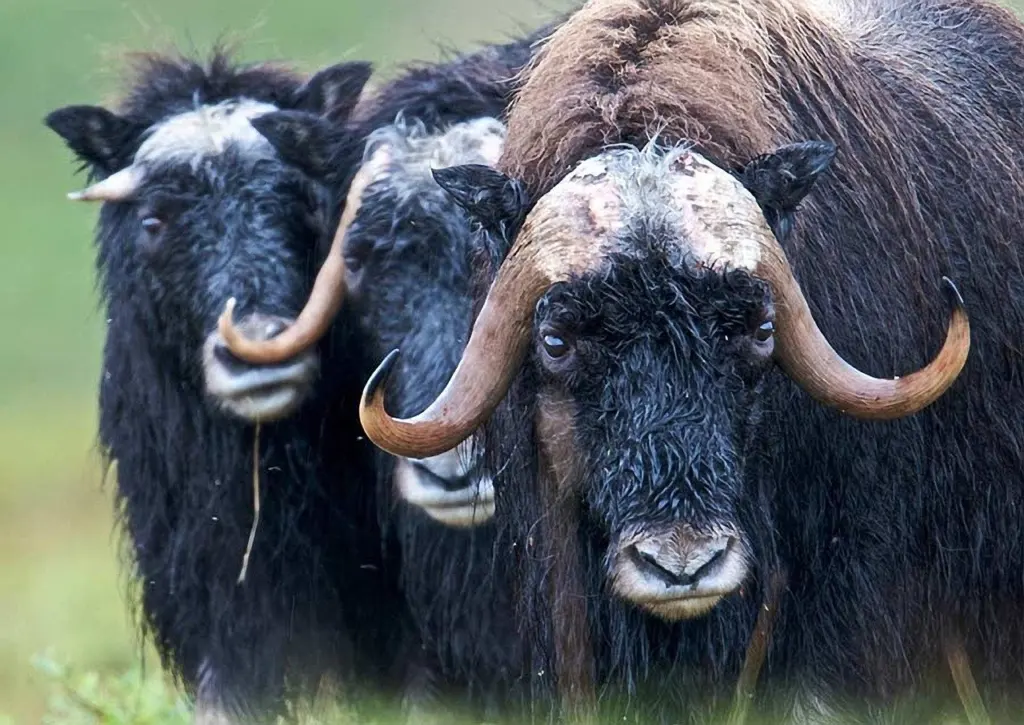
Muskox look larger than their measurements suggest, and the reason is mostly coat and horns. The shaggy outer coat hangs low and the horns curve down beside the face, so the silhouette is broad and heavy. Alaska Wildlife describes the insulating underwool, called qiviut, as keeping the animals warm in temperatures as low as -40°F.
Fur volume is not body mass, though. Judge size by shoulder height against nearby terrain, such as a rock or a person standing at a known distance, rather than by how wide the coat looks. A bull at about 5 feet at the shoulder will look taller beside a cow at about 4 feet even when the coats hide the legs.
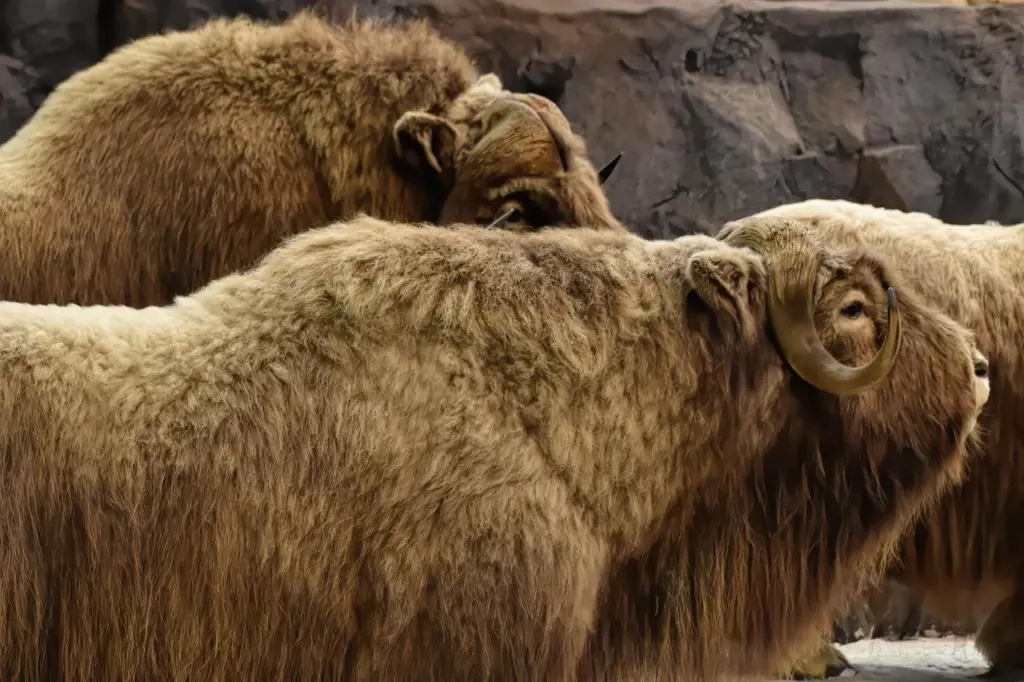
A big coat does not make muskox suited to every winter landscape. The NPS notes that they do not do well in deep snow and that snow depth appears to limit their distribution, so winter sightings tend to be on ground where snow stays manageable.
Muskox in Dovrefjell
In Dovrefjell, muskox are wild animals in a national park setting, and the size figures above are the best guide to what you will be watching. Winter herds may include up to 75 animals, according to the Alaska Department of Fish and Game. A herd sighting can therefore mean many animals of 400-800 pounds standing close together rather than one animal you can keep an eye on.
For Norwegian management and research, two institutions to know are the Norwegian Environment Agency and the Norwegian Institute for Nature Research (NINA). Both are based in Trondheim, and researchers from each appear as co-authors on a research paper hosted on PubMed Central. Before you visit, check the park’s own information and the Norwegian Environment Agency’s pages for current local rules, because signage and park staff set the distance that applies on the day.
If you are choosing travel dates, our guide on when is midnight sun in norway covers daylight by location. For another Arctic species, see Arctic Fox Facts: Survival Secrets, Behavior, and Conservation in 2026.
Keeping a safe distance from muskox
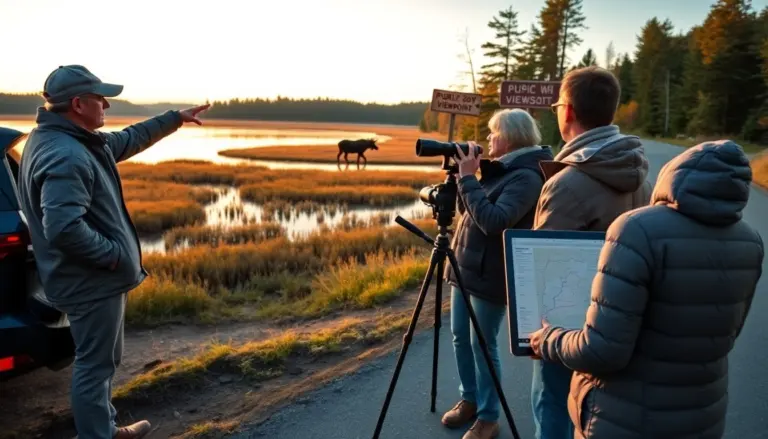
Muskox viewing works best when you treat distance as a margin that you control, not a number you chase. Animals that weigh 600-800 pounds as bulls and 400-500 pounds as cows, with horns, can injure a person, so close approaches are not worth a better photograph. Use binoculars or a long lens, and stay where park staff and signs say you may stand.
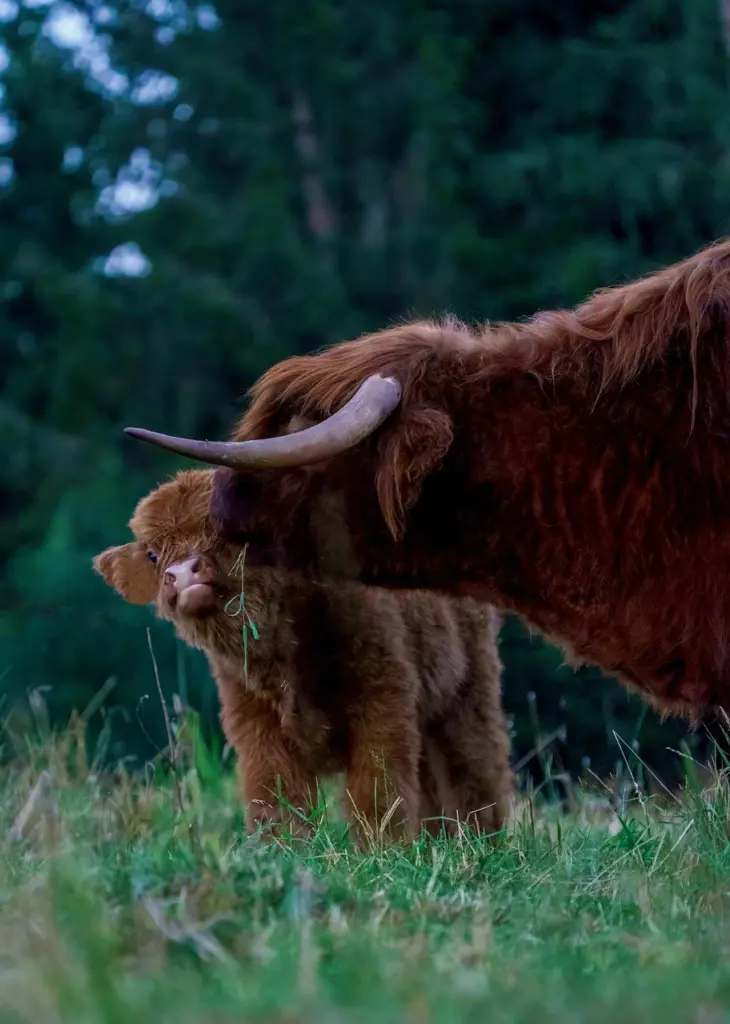
- Read the herd’s reaction. When threatened, muskox form a tight circle with adults facing outward and calves in the centre, as Alaska Wildlife describes. If a herd bunches up like this, you are too close. Stop, then back away slowly.
- Allow extra room in spring and early summer. Calves are born April to June, so protective adults are the likeliest to react then.
- Never step between adults and young. Yearlings at 150-235 pounds and newborns at 22-31 pounds both sit inside the group the adults are guarding.
- Do not rely on size to judge risk. A cow is smaller than a bull, but both are heavy wild animals, so the same caution applies to either.
Frequently asked questions
| Question | Answer |
|---|---|
| How much does a muskox weigh? | Adults weigh 440-880 pounds with sexes combined, per the NPS. Bulls are typically 600-800 pounds and cows 400-500 pounds. |
| How big is a newborn muskox calf? | Single calves weigh 22-31 pounds at birth. They are born between April and June to cows older than two years. |
| How close can you safely approach muskox in Dovrefjell? | Do not approach. Stay as far back as park signs and staff direct, and move farther away if the herd bunches into a circle with calves in the centre. |
| How many muskox travel together in winter? | Winter herds may include up to 75 animals, so plan for a group rather than a lone animal. |