| Route | Length, climb and time | Planning use |
|---|---|---|
| Besseggen ridge | 14 km one way; about 1,100 m; 6–9 hrs; demanding; July to late September | A full day for strong walkers. Walk Memurubu to Gjendesheim after taking the Gjende boat out. |
| Trolltunga | 27 km return from the P2 car park at Skjeggedal; about 1,200 m climb; 1 June to 30 September | The longest of the day routes here. Outside the season, a guided hike is recommended. |
| Preikestolen | 8 km round trip; about 500 m ascent; 4–5 hours; moderate | The gentlest of the named day hikes, and the easiest to fit into a short trip. |
| Kjeragbolten | 11 km return; 750 m in all; 5–6 hours | Shorter than Trolltunga but with real climbing. Do not judge it by distance alone. |
| Jotunheimen hut loop | About 95 km loop; 6 days; about 3,285 m climb; July to September | A demanding hut-to-hut classic for walkers who can sustain long days in a row. |
| Rondane loop | About 60 km loop; 4 days; about 1,890 m climb; June to September | The lower-commitment multi-day option, and the one with the earlier season start. |
Preikestolen’s figures and Besseggen’s time, climb and grade follow the hiking overview at Norway Tourism; the other figures follow Norway Hut to Hut Hiking’s route guide.
Hiking in Norway national parks needs no trail permits and no park entry fees, so the real choices are route length, season and where you sleep. Pick a day route for a fixed base, or link huts for several days.
If you already know you want several nights out, start with the guide to the best multi day hikes in Norway, or go straight to how hut to hut hiking norway works for a first trek. The sections below connect routes, markers, seasons, camping rules, cabins and gear so you can decide in the right order.
Choosing where to start
Start from how many nights you want outdoors, not from the most photographed viewpoint. Norway’s marked routes serve two formats well: a single day from a fixed base, and a multi-day loop between huts. The first suits short trips and anyone who wants the same bed each night. The second suits walkers who want continuous days in the mountains without carrying shelter. Neither format needs a permit or a park ticket, which means the decision is about your legs, your dates and your appetite for logistics.
Day trips from a fixed base
The Norway Tourism overview grades Preikestolen as moderate and Besseggen as demanding, and that gap is the most useful sorting tool for day routes. Use it alongside the route guide’s distances and climb figures.
- Gentlest option: Preikestolen is the shortest of the named day routes and carries the moderate grade, so it suits a first Norwegian hike or a day when weather or energy is uncertain.
- Biggest single day: Besseggen and Trolltunga both need a full day. Besseggen is graded demanding; Trolltunga has the longest return distance of the day routes in this guide.
- Short but not easy: Kjeragbolten covers less distance than Trolltunga, yet its climbing is substantial. Choose it when you want a half-to-full day rather than an all-day outing, and do not mistake it for a stroll.
- Travelling with children: shorter, gentler routes matter more than famous names, and the guide to family hikes in Norway is the place to compare them.
Several days between huts
Which national park suits a first Norway hike? For a first multi-day trip, Rondane is the lower commitment: its loop is shorter, has fewer days and involves less climbing than the Jotunheimen loop, according to the route guide. Jotunheimen suits walkers who already know they can sustain long days on consecutive days. If you want a single big day before committing to a loop, Besseggen is a useful test, though it is demanding rather than gentle.
Hardangervidda appears on the same list of six multi-day hut treks, alongside the Trollheimen Triangle and the St. Olav Ways. That gives you alternatives if neither of the first two loops fits your dates or the kind of terrain you prefer.
Day hikes with a clear objective
Day routes reward a precise plan more than extra stamina. The distance, the climb and the time window each change the decision, and they do not always point the same way. The figures in this section come from the route guide and the Norway Tourism overview.
Besseggen ridge
Besseggen is 14 km one way, walked from Memurubu back to Gjendesheim. The overview gives about 1,100 m of climb and 6–9 hours, with a demanding grade and a season from July to late September. To reach the start, you take the Gjende boat from Gjendesheim to Memurubu, which cost NOK 260 one way in 2026. That sequence fixes your day: boat out, ridge walk, finish at the place where you began.
The 6–9 hour spread is wide, so plan around the slow end rather than the fast one. A walker who budgets for the shorter figure and falls behind has no margin on a ridge. Our Besseggen ridge hike difficulty guide goes deeper on direction, timing and the demanding sections.
Trolltunga
Trolltunga is 27 km return from the P2 car park at Skjeggedal, with about 1,200 m of climbing. The season runs from 1 June to 30 September, and a guided hike is recommended the rest of the year. Treat that as a real boundary. Outside the window the route is a different undertaking, and a guide is the sensible way to attempt it. Because the distance is long and the climb sustained, this route suits walkers who have already managed a full day on a moderate trail.
Preikestolen and Kjeragbolten
Preikestolen is 8 km round trip with about 500 m of ascent and takes 4–5 hours at a moderate grade. Kjeragbolten is 11 km return with 750 m of climbing in all and takes 5–6 hours. The difference in distance is smaller than the difference in effort, which is why reading the climb figure matters as much as the kilometres. Pick Preikestolen for an easier day and Kjeragbolten for a harder half-day-plus when conditions are good.
Ice and the coast
Marked summer trails and glaciers are separate categories. If ice is the goal, compare operators in the guide to a guided glacier hike Norway visitors can book. If the coast appeals more than the high plateau, Hiking the Lofoten Islands: The Essential 2026 Guide To Trails, Weather, And Safety covers trails, weather and safety there.
Multi-day loops in Jotunheimen, Rondane and Hardangervidda
Multi-day routes are where Norway’s hut network earns its reputation. The loops below are described in Norway Hut to Hut Hiking’s guide, and they differ mostly in length, climb and season rather than in the basic method.
Jotunheimen
The Jotunheimen hut-to-hut loop is about 95 km over 6 days, with about 3,285 m of climbing, and runs from July to September. The climb total is the key figure: it is the highest of the loops listed here, so the route suits walkers who can keep a steady pace across consecutive days rather than those who rely on a single strong day. The season also starts later than Rondane’s, so an early-summer trip needs a different route.
Rondane
The Rondane loop is about 60 km over 4 days, with about 1,890 m of climbing, from June to September. It is the better first multi-day choice for two reasons: the commitment is shorter, and the season opens earlier. It also leaves room to turn a 4-day plan into something more relaxed if weather slows you down.
Hardangervidda
Hardangervidda is listed fifth among the six multi-day hut treks in the same guide. Treat it as a third option when the Jotunheimen and Rondane loops do not match your dates or preferences, and check the current route details with DNT before you commit.
Trails, red T markers and navigation
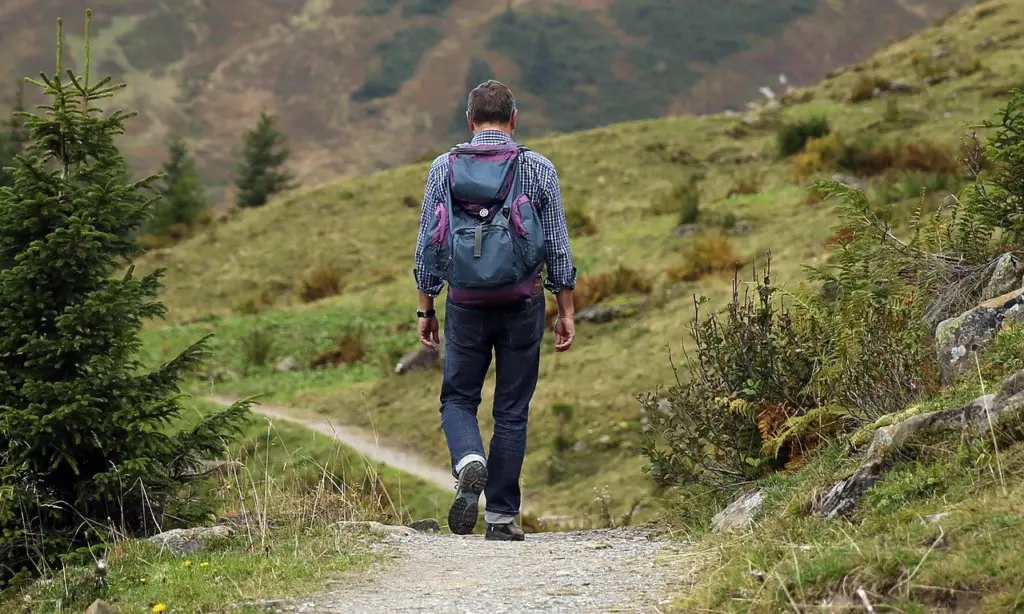
The Norwegian Trekking Association (DNT) marks over 23,000 km of summer trails, according to Norway Hut to Hut Hiking. Norway Tourism adds that red Ts painted on cairns and rocks mark the DNT network. For a visitor, the practical meaning is simple: a red T confirms you are on a maintained route, and the absence of one for a long stretch is a signal to stop and check your position.
Paper maps and phone apps each have a place. Compare options in the guide to the best hiking map app Norway offers, and decide before departure which one you will rely on. Do not count on a single device in terrain where weather and cold drain batteries.
Seasons and weather
Route seasons set the calendar, and hut staffing narrows it further. Huts are staffed from mid-June to mid-September, according to Norway Hut to Hut Hiking. Within that window, the loops open at different times: Rondane from June, Jotunheimen from July. Trolltunga’s season runs from 1 June to 30 September, and Besseggen runs from July to late September.
Mountain weather is the second limit. Norway Tourism says summit conditions run about 10°C colder than the fjord below, and fog or sleet in July is normal. That is not a warning to stay home. It is a reason to pack for the summit, not the car park, and to treat a fine morning at sea level as a weak forecast for the ridge.
For a month-by-month view, see the guide to the best time to hike in Norway. Late-season trips need their own plan: several day routes stay open to the end of September, but staffed huts stop earlier in the month. If September is your window, read the guide to hiking in norway in september before choosing a route that relies on staffed huts.
Camping under allemannsretten
Can you camp anywhere in Norway? No. The right to roam (allemannsretten) is generous, but it has conditions, and several well-known routes add their own. Norway Tourism explains that everyone may travel on foot across uncultivated land, called utmark, regardless of who owns it. Farmyards, planted fields and gardens are excluded.
What the right covers
The right is about uncultivated land, not about any open space. A hiker’s guide for visitors frames the limit plainly: stay away from cultivated lands and do not destroy anyone’s property. If a field looks tended, planted or fenced for livestock, treat it as outside the right and keep walking.
| Rule | Value | Planning use |
|---|---|---|
| Distance from dwellings | Pitch at least 150 m from the nearest inhabited house or cabin | Judge distance before unpacking, and move on if in doubt. |
| Lowland stays | Maximum two nights in the same spot without the landowner’s permission; longer is allowed in the high mountains, per the source | Rotate camps in lowlands or ask the landowner. |
| Open fires | None from 15 April to 15 September in or near forest and vegetated land | Plan to cook on a stove through the summer. |
| Trolltunga plateau | Camping only in zones marked with tent symbols on the official map | Check the map before you carry a tent up. |
| Vehicle sleeping | Not allowed at the Trolltunga, Preikestolen or Kjerag car parks | Arrange a bed elsewhere for these trailheads. |
These rules are set out in the Norway Tourism hiking overview.
Pitching and fires
The distance rule and the two-night rule shape a camping route more than any other. A route that hugs farms and cabins leaves little legal pitching space, while open mountain ground leaves plenty. The two-night limit also matters for people who want a base camp in lowland country: use the high mountains for a longer stay, or ask permission.
The fire window is long. Because the restriction covers forest and vegetated land through the summer, a stove is the default, not the backup. For the dates in detail, see the guide to the campfire ban Norway dates.
Named hikes with tighter rules
Trolltunga’s plateau limits camping to marked tent zones, and the car parks at Trolltunga, Preikestolen and Kjerag do not allow sleeping in vehicles. These are exceptions to the general freedom, so read them as local rules for crowded places. If you plan to do one of these hikes, book a bed or camp legally in a different location instead of improvising at the trailhead.
Low impact and dogs
The right to roam depends on visitors leaving land as they found it. The guide to leave no trace Norway camping covers waste, washing and campsite choice. If you bring an animal, read the rules on hiking with dogs in Norway rules before departure, because grazing livestock affects where you can walk and how.
Cabin-to-cabin hiking
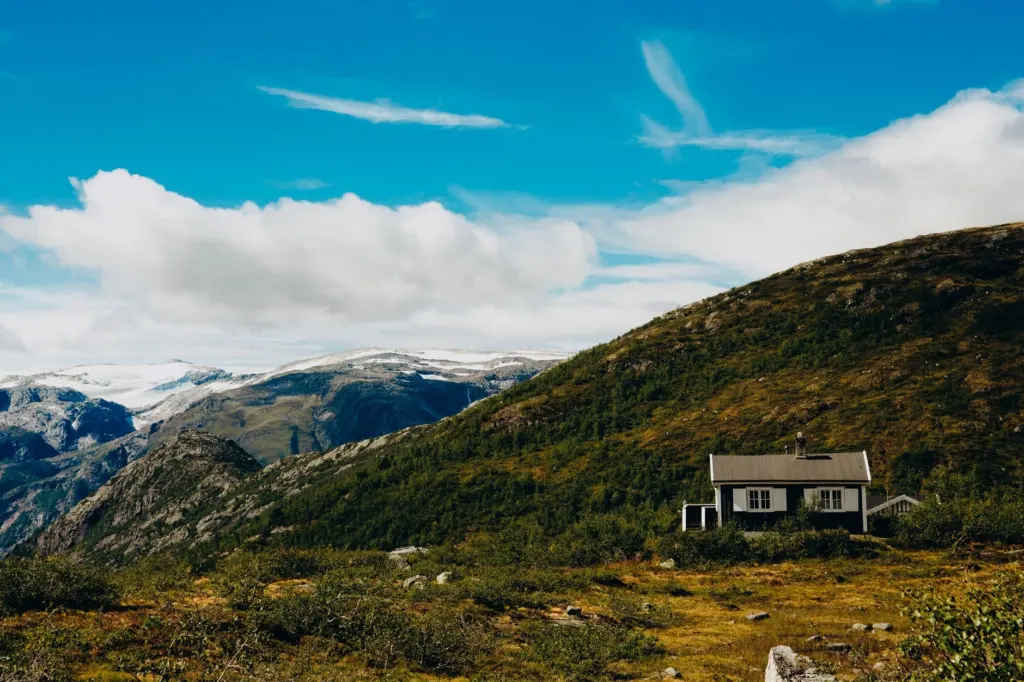
Cabin-to-cabin hiking works by linking mountain huts a day’s walk apart, so you carry clothes and a sleeping liner rather than a tent and stove, according to Norway Hut to Hut Hiking. DNT runs over 600 huts, and they are staffed in summer from mid-June to mid-September. The route you choose decides each night’s bed, so the loop and the hut chain are effectively one decision.
Staffed and self-service cabins
Not every cabin has a host. Staffed huts operate in the summer window, and self-service cabins work without staff, so what you can expect on arrival depends on the hut and the date. Check with DNT how booking and key access work for each cabin on your route before you leave, because the arrangement may differ from hut to hut. A visitor guide notes that large serviced DNT cabins such as Gjendesheim also work well as a base for day hikes, which suits anyone who prefers one bed to a moving chain.
How a trip comes together
- Choose the loop first. The loop sets the hut chain, so decide between Rondane, Jotunheimen and other routes before looking at beds.
- Match huts to your dates. Mid-June to mid-September is the staffed window, and a trip outside it needs a different plan.
- Confirm access for each cabin. Ask DNT how booking and keys work for the cabins you will use, especially any that are not staffed on your dates.
Each day should end at a hut. If a leg is longer than you are comfortable walking, shorten the loop rather than hoping to improvise.
Gear and safety for multi-day hikes
What gear is needed for a multi-day hike in Norway depends on the sleeping model. On hut-to-hut routes, you carry clothes and a sleeping liner, and the route guide notes that you leave the tent and stove behind. If you camp, you carry shelter and a stove, which makes the pack heavier and the daily distance shorter. Decide on the model first, then pack to it.
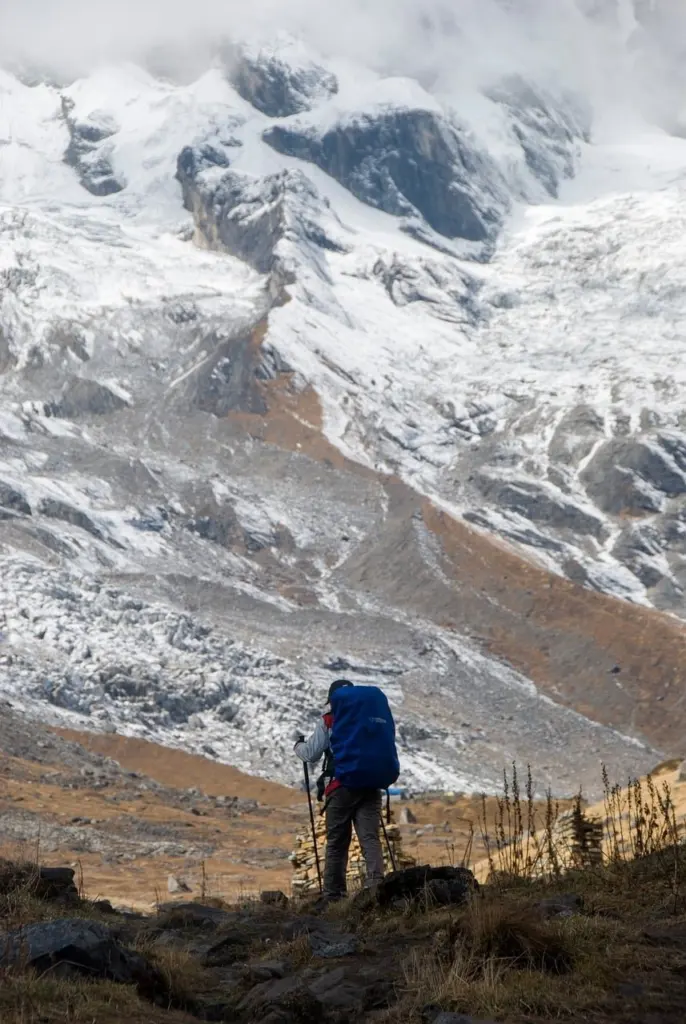
Two items are non-negotiable on any route. A hiking guide to lesser-known trails advises always bringing rain gear and a first aid kit. Add enough warm layers for the summit-versus-fjord temperature gap described in the seasons section. A cold, wet hiker on an exposed ridge has few easy options.
For the full list, read what to pack for hiking in Norway and the checklist in 10 Essentials For Hiking: The 2026 Checklist To Hike Safer And Smarter. Water is the other planning item: if you are wondering can you drink stream water in Norway, settle that before you rely on streams for a long day.
Frequently asked questions
Where can I get trail advice if the parks have no ranger stations?
A visitor guide says there are no ranger stations in the parks and suggests the DNT offices in the cities instead. Ask there about conditions on your route before you head into the mountains.
Which emergency numbers should I know?
Norway Tourism lists 113 for medical emergencies and 112 for police. Save both before you leave signal range.
Where can I stay for the Besseggen hike?
Norway Hut to Hut Hiking names Gjendesheim, a 185-bed DNT lodge, and Memurubu, a private staffed lodge, at the two ends of the route.
How fast can I expect to climb on a steep trail?
One hiking guide gives a rule of thumb of a maximum of 350 to 400 vertical metres per hour. Treat it as a ceiling for strong walkers, not a target, and expect to be slower with a heavy pack or in poor weather.