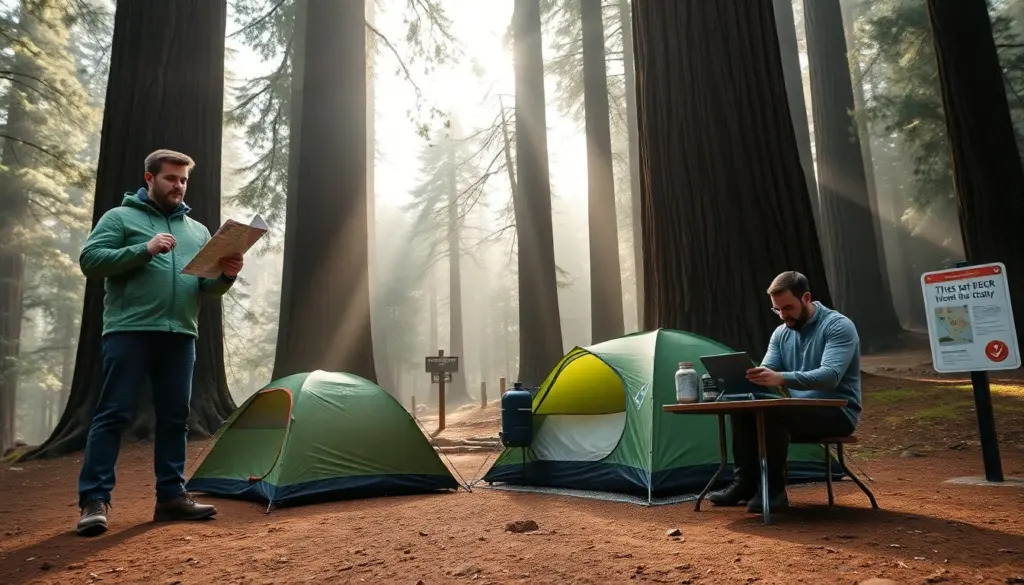
Camping Redwood National Park attracts people who want giant trees and quiet nights. Camping Redwood National Park offers marked campgrounds, backcountry options, and ranger guidance. This guide lays out best seasons, official sites, permit rules, and simple packing lists. It also covers wildlife safety, campfire rules, and first aid basics. Readers will get clear steps they can use to plan safe, low-impact trips among the redwoods.
Key Takeaways
- Camping Redwood National Park offers diverse options including official campgrounds and backcountry sites that require permits.
- The best times to camp are spring and fall due to mild weather and fewer crowds, while summer features warm days and coastal fog.
- Visitors should prepare for variable weather by packing layered clothing, rain gear, and essentials like waterproof jackets and sturdy boots.
- Popular campgrounds like Jedediah Smith, Mill Creek, and Elk Prairie each have unique features and access, so campers should choose based on their preferred activities.
- Wildlife safety is crucial: keep distance from elk and deer, use bear-safe canisters, and follow park rules on campfires and food storage.
- Obtaining permits and following backcountry regulations helps preserve the environment and ensures a safe, low-impact camping experience.
Best Time To Camp And Weather Considerations
Spring and fall offer mild temperatures and fewer visitors. Summer brings warm inland days and cool coastal fog. Winter brings rain and limited road access. Camping Redwood National Park sees high visitor numbers from June to August. Visitors should check seasonal road closures before they leave. Weather can shift from sun to fog in one hour. Bring layered clothing and rain gear for all seasons. Expect daytime highs of 50–70°F and nighttime lows near 40°F in summer. In winter expect regular rain and colder nights. Beyond temperature ranges, campers should consider microclimates across the park: valleys and river corridors are often warmer and more sheltered, while coastal sections remain cool and damp with frequent fog and breeze. Tide schedules matter for coastal camps and day hikes — low tides open access to some beach features but also expose slick or unstable rock. Finally, plan for limited cell reception in many areas and allow extra travel time when visibility is reduced by fog or storms.
Official Campgrounds And Facilities
The park and adjacent national forests run several developed sites. These campgrounds provide toilets, picnic tables, and potable water at select sites. Reservations are required at some sites and first-come, first-served applies at others. Camping Redwood National Park campground hosts provide maps and local updates. Campsite fees vary by location and season. Pets require leash and permit rules at certain sites. Visitors should arrive early on busy weekends to secure spots. Many campgrounds restrict the size of RVs or vehicles and have quiet hours and generator rules — check the specific campground’s information before you go. Accessibility features vary: some loops include accessible restrooms and paved access to nearby viewpoints, while others are rustic. Trash collection is limited at backcountry trailheads, so plan to pack out what you bring in if facilities are full or not available. Drinking water may be turned off seasonally; always confirm water availability and carry a backup plan such as purification tablets or extra water containers.
Jedediah Smith, Mill Creek, And Elk Prairie — Quick Comparison
Jedediah Smith Campground sits near streams and old-growth stands. Jedediah Smith offers river access and shaded sites. Mill Creek Campground sits closer to the coast and offers easy trailheads. Mill Creek sees beach fog and cool nights. Elk Prairie Campground sits near prairie and elk viewing areas. Elk Prairie offers wide views and frequent elk sightings in morning. Each campground supports tent and small RV camping. Each site has different road access and seasonal availability. Campers should match site choice to desired activities. For example, choose Jedediah Smith for river swimming, shaded hikes, and access to dense forest trails; choose Mill Creek if you want short walks to coastal bluffs and beach access; choose Elk Prairie if your goal is wildlife viewing and sunsets over open meadowland. Consider drive times between campgrounds and trailheads, restroom locations, and whether the site has potable water or dump stations if you’re in an RV. Peak-season occupancy and road conditions can affect your plans, so have a few backup camp options in mind.
Backcountry Camping, Reservations, And Permits
Backcountry camping requires permits for overnight stays in many areas. The park issues permits at ranger stations and online portals. Camping Redwood National Park backcountry rules limit party size and stay length. Visitors must fill permit forms with trip dates and campsite choices. Some coastal sections restrict camping to protect nesting birds and fragile dunes. Group permits often require additional approval. Permit fees apply in some zones. Return permits or notifications help rangers track visitor presence. When planning a backcountry route, allow extra days for unexpected weather and route changes; file a detailed itinerary with park staff and a trusted contact. Follow campsite rotation and designated site rules to reduce vegetation damage. Know the specific rules for human waste disposal in the area you plan to camp — some sites require pack-out of solid waste or use of catholes at a minimum depth and distance from water. Finally, carry a map, compass, and backup navigation tools, and understand that emergency response times can be long in remote sections of the park.
Practical Packing, Wildlife Interactions, And Safety Tips
Pack layers, a waterproof jacket, sturdy boots, and a headlamp. Bring extra food and a stove. Many sites ban ground fires and require camp stoves. Pack a water filter or purification tablets when water sources appear uncertain. Carry bear-safe canisters where required and use park lockers when available. Keep distance from Roosevelt elk and deer. Do not touch or approach young animals. If a large animal approaches, back away slowly and leave the area. Learn basic navigation and check-in routines before each trip. Also bring a small first-aid kit with blister care, tape, and antihistamines, and know how to treat hypothermia and heat-related illness. Practice Leave No Trace principles: camp on durable surfaces, avoid creating new fire rings, and pack out all trash and food scraps. Store cooking gear and scented items in vehicles or bear lockers, and never leave food unattended at campsites. Be mindful of ticks, poison oak, and slippery roots on forest trails; gaiters and long sleeves can help reduce exposure. For coastal visits, watch tides and sneaker waves, and avoid cliff edges; for river activities, be cautious of cold water and strong currents. Finally, review local restrictions on drones, rock collecting, and cultural sites — respecting regulations helps protect the park for future visitors.