The best time to visit Yellowstone depends on what a traveler wants to see and do. The park offers different wildlife patterns, weather conditions, and visitor levels across seasons. This guide explains seasonal trade-offs and helps a visitor pick dates for wildlife viewing, warm weather, or quieter roads. It uses clear facts and practical tips to help a traveler plan their trip.
Key Takeaways
- The best time to visit Yellowstone depends on your interests, whether wildlife, warm weather, or solitude.
- Spring (April–June) is ideal for seeing newborn animals and active wildlife with fewer crowds by late May to early June.
- Summer offers full access and warm weather but comes with heavy crowds, best managed by early starts and exploring less-visited areas.
- Fall (September–October) provides cooler temperatures, fall colors, and fewer visitors, making it great for photography and quiet trails.
- Winter (December–March) features snowy landscapes and limited access, with February being the best for guided tours and safe wildlife viewing.
- Plan Yellowstone visits by aligning your travel dates with the park’s seasonal variations to optimize your experience.
Overview Of Yellowstone’S Seasons And Visitor Goals
Yellowstone has four distinct seasons. Each season affects access, wildlife, and weather. A traveler who wants to see bison calves and elk calves will choose spring. A visitor who wants to hike with full trail access will pick summer. Someone who wants quieter trails and fall colors will travel in September or October. A traveler who wants snow scenery and solitude will pick winter. The best time to visit Yellowstone links to the traveler’s primary goal: wildlife, warm weather, or fewer crowds.
Spring (April–June): Wildlife Activity, Waterfalls, And Early-Season Access
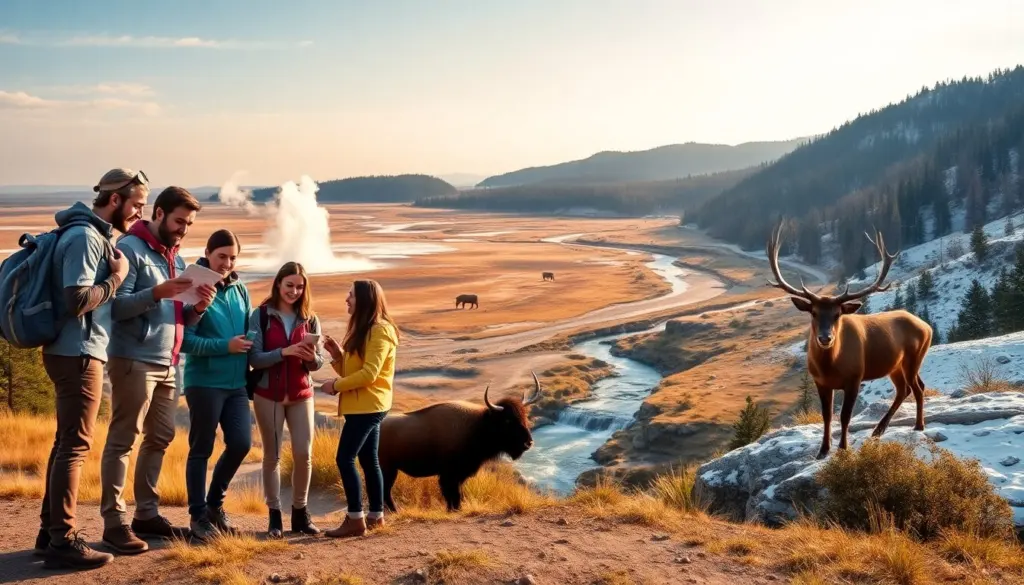
Spring brings heavy wildlife activity. Bears emerge and they search for food. Elk and bison calves appear in late April and May. Rivers swell and waterfalls run strong after snowmelt. Roads open in phases: some park drives remain closed into May. A tourist who values wildlife viewing and dramatic water will find the spring timing ideal. The best time to visit Yellowstone for lower spring crowds is late May to early June, when roads open more fully and a visitor still sees newborn animals.
Summer (June–August): Peak Weather, Full Access, And Crowds
Summer delivers full road access and warm days. Trailheads and services run at peak capacity. A visitor can access Yellowstone’s main loops and backcountry with fewer closures. Wildlife moves to higher meadows and sightings concentrate at dawn and dusk. Visitors should expect heavy crowds at popular sites like Old Faithful and the Grand Canyon of the Yellowstone. The best time to visit Yellowstone for hiking and warm weather is July, but it carries the highest visitor levels.
Summer Planning Tips: How To Beat Crowds And Make The Most Of Peak Season
Arrive early and leave late. Travelers who start before sunrise avoid parking headaches at major sites. They should book lodging and tours months in advance. Use less-visited trail systems like the Bechler or Shoshone areas for quieter time. Pack layers: afternoons warm but mornings stay cool. Carry water and a basic first-aid kit. The best time to visit Yellowstone for quieter summer hours is at dawn, when wildlife remains active and tour buses lag behind.
Fall & Early Winter (September–November): Cooler Temperatures And Fewer Visitors
Fall brings cooling temperatures and thinning crowds. Elk begin rutting in September and they draw photographers. Tree leaves change and they add color to valleys. Road access gradually reduces in October and November. A traveler who wants solitude and photographic light will find early September best. By late October, services scale back and some roads close after the first snow. The best time to visit Yellowstone for fall color and fewer people is mid-September to early October.
Winter (December–March): Snowy Landscapes, Guided Tours, And Solitude
Winter covers the park in deep snow and it limits private vehicle access. The park opens to guided snowcoach and snowmobile tours. A visitor will see wolves and bison in stark, snowy settings. Lodges near park entrances remain open but they require advance bookings. The best time to visit Yellowstone for snow scenes and quiet is February, when tour operators run regular trips and the daylight increases for safer travel.
Winter Practicalities: Travel, Safety, And Best Activities For Cold-Season Visits
Travel by guided snowcoach or snowmobile to reach central sites. Drivers should prepare for icy sections and sudden weather shifts. A visitor should layer clothing and use insulated boots. Carry bear spray in shoulder seasons and know how to use it. Book guided wildlife tours for safer viewing near pack animals and wolves. The best time to visit Yellowstone for safe winter activity is when a visitor books certified guides and confirms road status with park rangers.